

Aviation Safety
Aviation Obstruction Lighting
for Offshore Wind Farms
You are currently viewing a placeholder content from Vimeo. To access the actual content, click the button below. Please note that doing so will share data with third-party providers.
More InformationYou are currently viewing a placeholder content from Vimeo. To access the actual content, click the button below. Please note that doing so will share data with third-party providers.
More InformationThe purpose of the International Civil Aviation Organization known as ICAO is to create regulations for aviation safety, security, efficiency & regularity, and environmental protection. While each country is responsible for setting their own requirements for aviation lighting on an offshore wind farm, the recommendations from ICAO are a standard starting point.
Comprehensive Solutions for
Aviation Obstruction Lighting
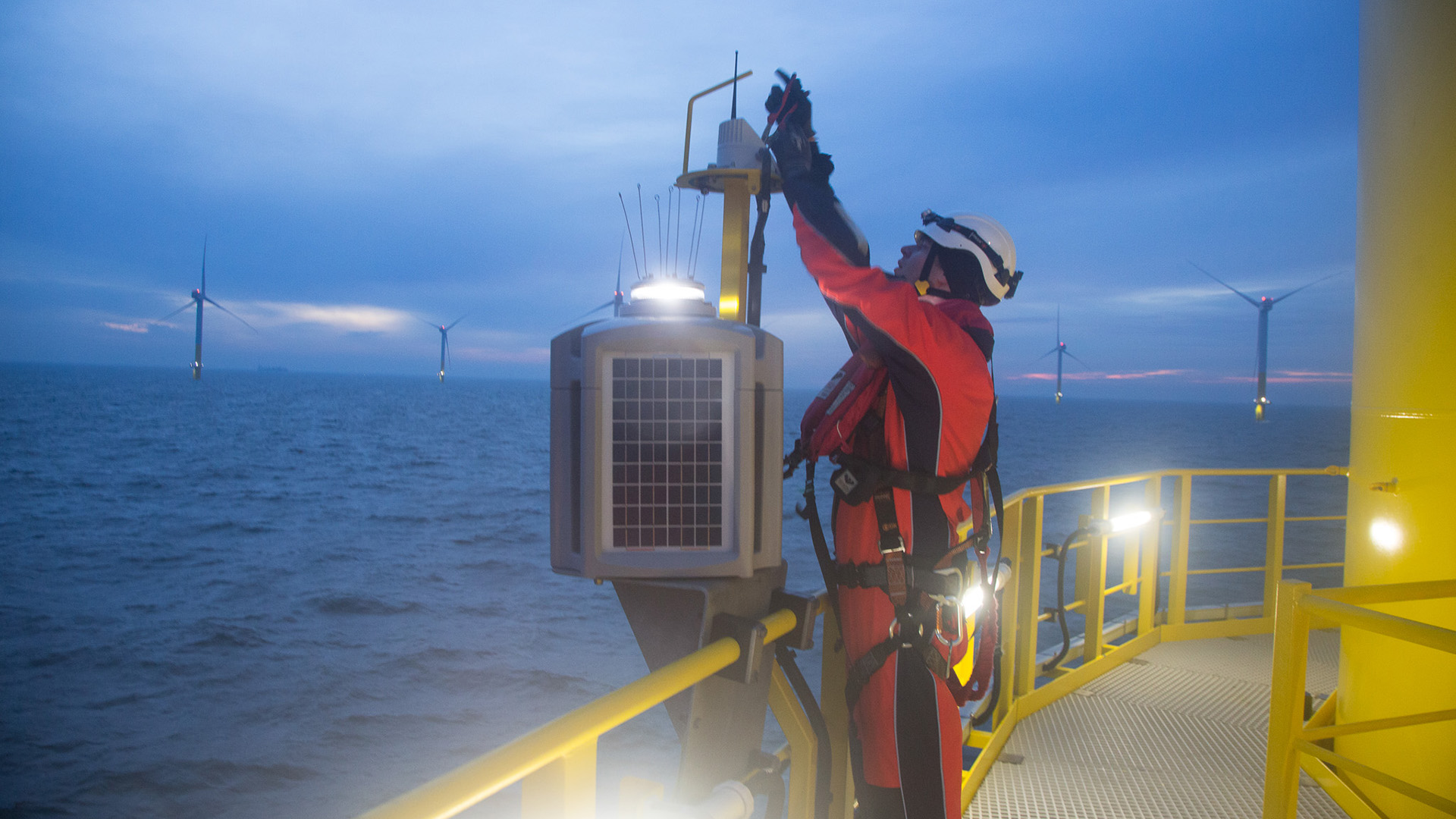
Whether it’s a helicopter approaching the wind farm or low flying airplanes passing by, there is an inherent risk with turbines and their blades rising out of the water. Aviation lights help pilots navigate around or through an offshore windfarm.
1 | High Intensity Aviation Lights
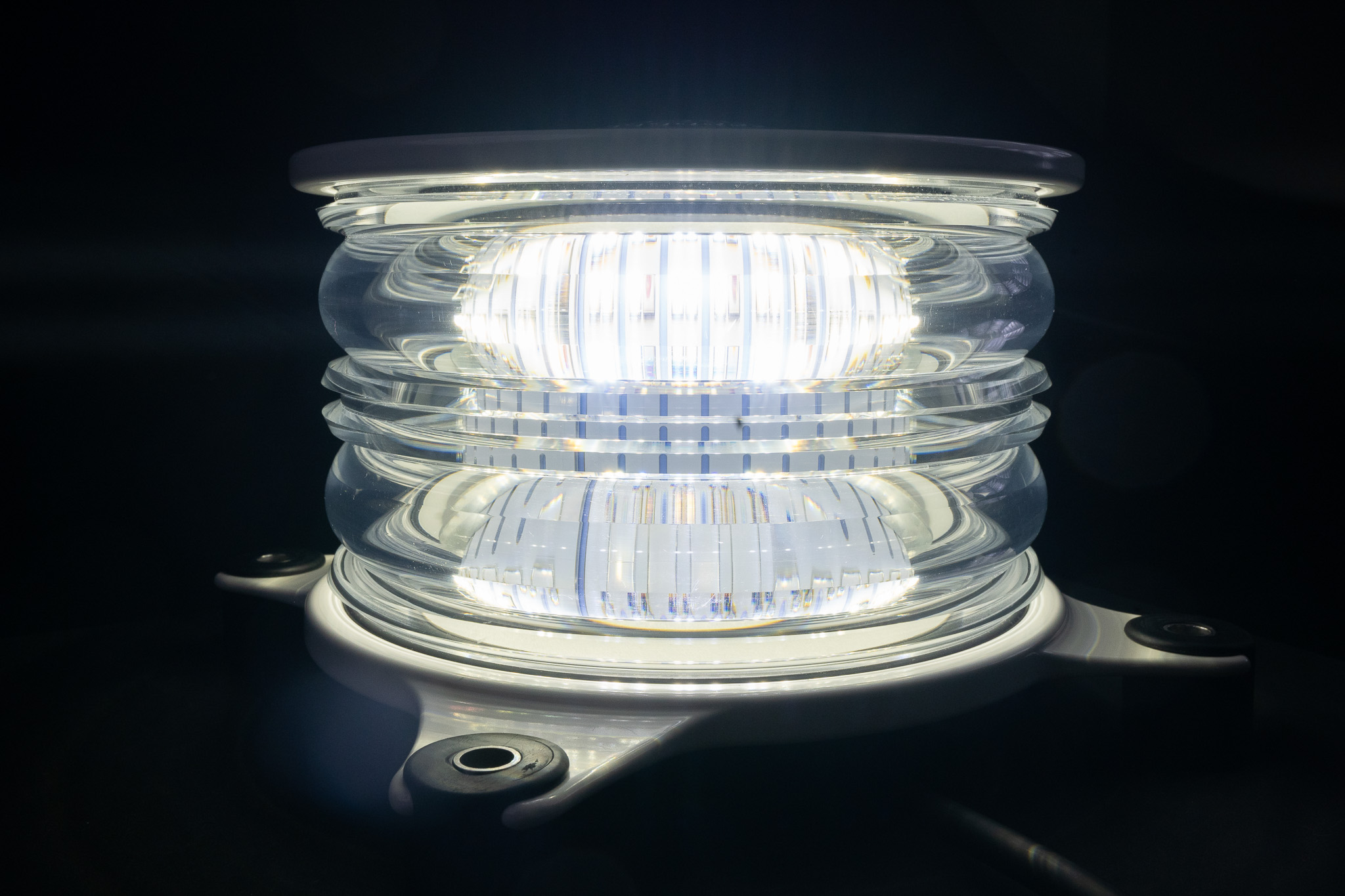
Safe operations in offshore wind farms rely on powerful aviation obstruction lights. 20,000 candela aviation lights ensure that wind turbines remain highly visible even during daylight hours. Bright white flashes warn pilots early of potential hazards.
You are currently viewing a placeholder content from Vimeo. To access the actual content, click the button below. Please note that doing so will share data with third-party providers.
2 | Medium Intensity Aviation Lights
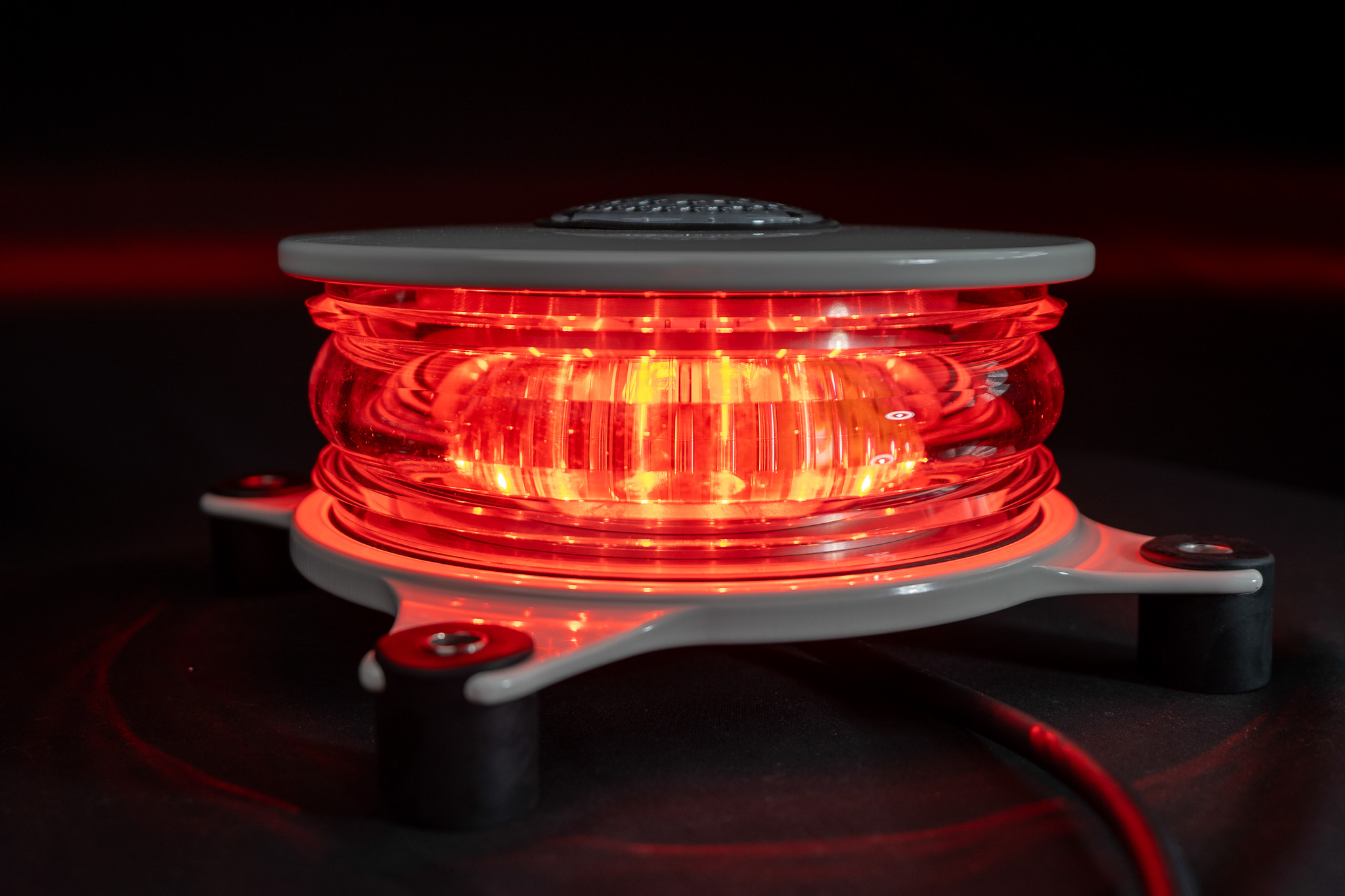
Medium intensity obstruction lights, mounted on top of the nacelle, warn aircraft of the turbine structures. Operating at 2,000 candela, they shine red at night.
You are currently viewing a placeholder content from Vimeo. To access the actual content, click the button below. Please note that doing so will share data with third-party providers.
3 | Low Intensity Aviation Lights
Smaller structures on offshore substations and platforms must also be clearly visible to aviation. Low-intensity lights reliably mark structures such as antennas, cranes, and other platform equipment. They emit a steady red light, ensuring that all obstacles remain clearly detectable at night and during poor visibility conditions.
4 | Helicopter Hoist Light
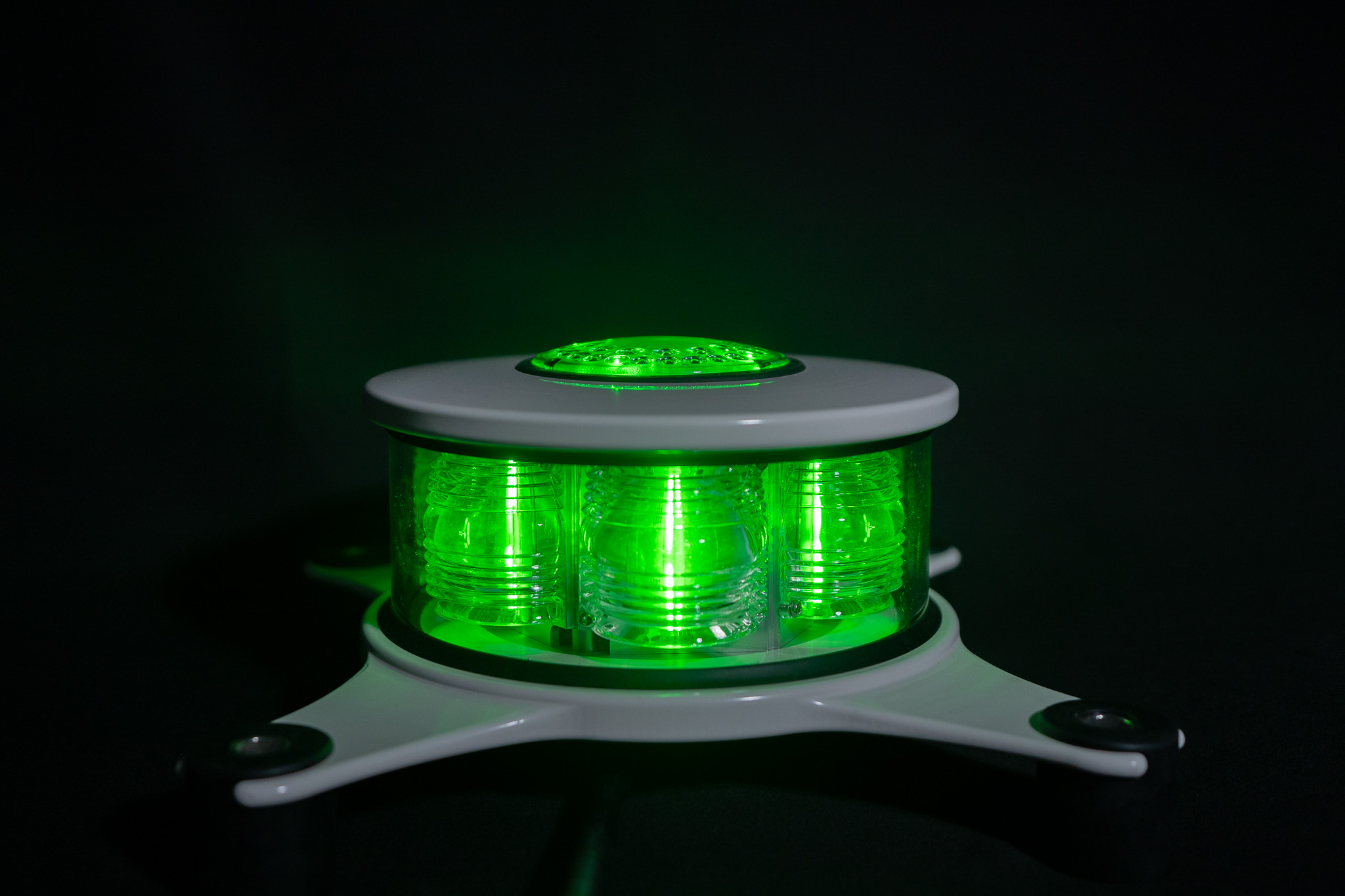
To support helicopter hoisting operations, a green Heli Hoist Light can be installed on the nacelle. This light provides a clear signal to helicopter crews that the turbine blades have been safely stopped and it is safe to commence hoisting activities.
You are currently viewing a placeholder content from Vimeo. To access the actual content, click the button below. Please note that doing so will share data with third-party providers.
5 | Visibility Meter
When fog rolls in and visibility decreases, safety becomes a top priority. The visibility meter continuously monitors the clarity of the atmosphere at the top of the nacelle. If visibility drops below a defined threshold, it automatically activates the aviation obstruction lights.
6 | Low Intensity Tower Lights
For turbines exceeding certain heights, additional steady burning low intensity lights are installed along the tower to ensure that even the tallest structures are safely marked.
You are currently viewing a placeholder content from Vimeo. To access the actual content, click the button below. Please note that doing so will share data with third-party providers.
Helicopter Corridor Floodlight
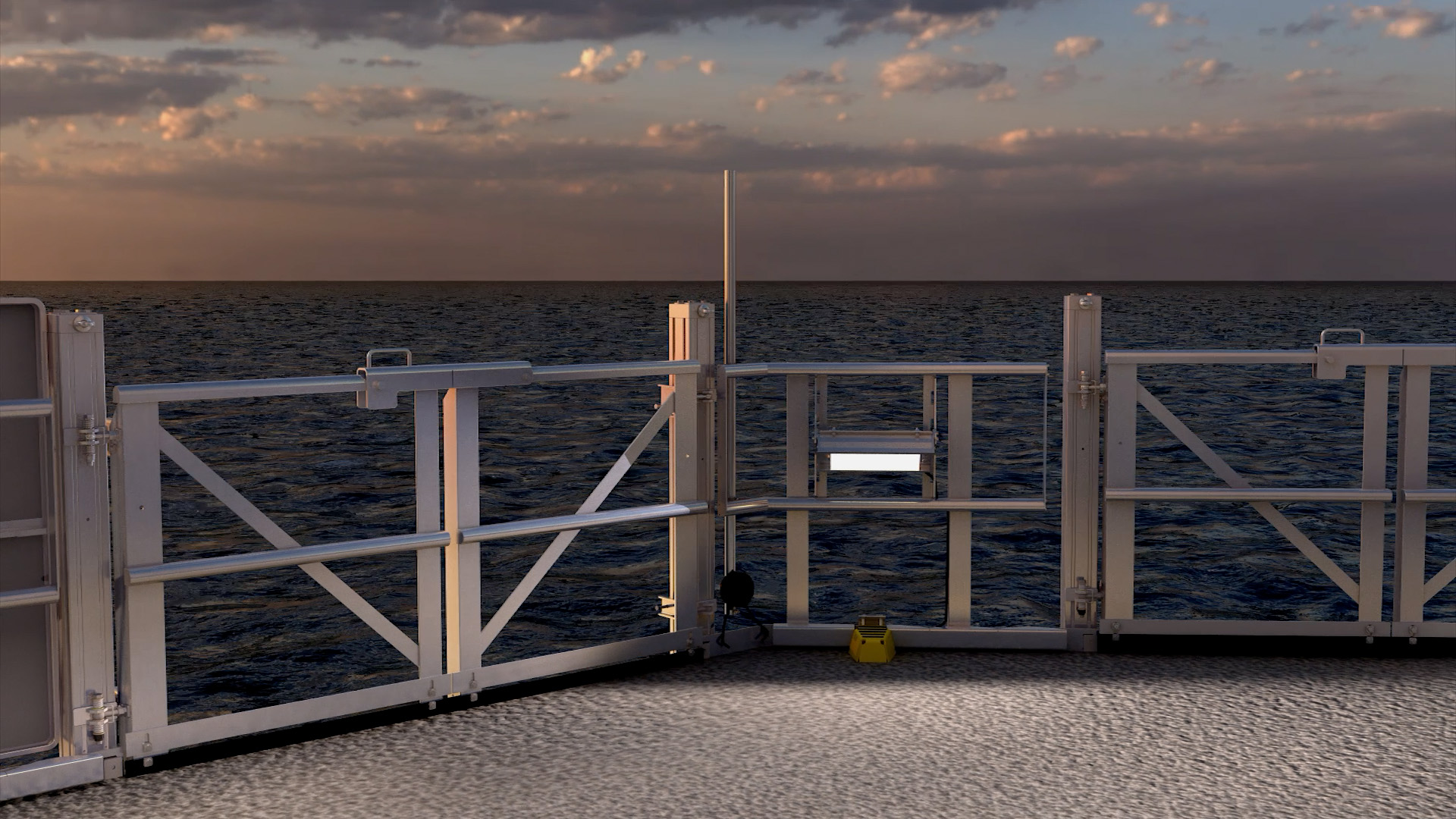
Helicopter Corridor Lights create illuminated pathways through the wind farm, guiding helicopters safely towards a heli pad, typically located on the offshore substation.
You are currently viewing a placeholder content from Vimeo. To access the actual content, click the button below. Please note that doing so will share data with third-party providers.
ADLS | Bedarfsgerechte Nachtbefeuerung
To reduce light pollution and increase efficiency, Aircraft Detection Lighting Systems (ADLS) are deployed. These systems keep the aviation lights switched off at night unless an aircraft is detected in the area. Once an approaching aircraft is detected, the navigation lights are automatically activated and remain on until the airspace is clear again.
You are currently viewing a placeholder content from Vimeo. To access the actual content, click the button below. Please note that doing so will share data with third-party providers.
See all our Solutions

Why Choose Us?
We have a sound experience developing products and solutions for offshore wind farms.
Our goal is to help make offshore windfarms a safe place to work.
For mor details get in touch with one of our regional experts today.